Why is my refrigerator leaking water in Oak Ridge?
Water pooling under the crisper drawers, or a puddle in front of the fridge every morning. The most common cause is a clogged defrost drain. Here are the causes in order, the safe checks you can do yourself, and when to call a technician.
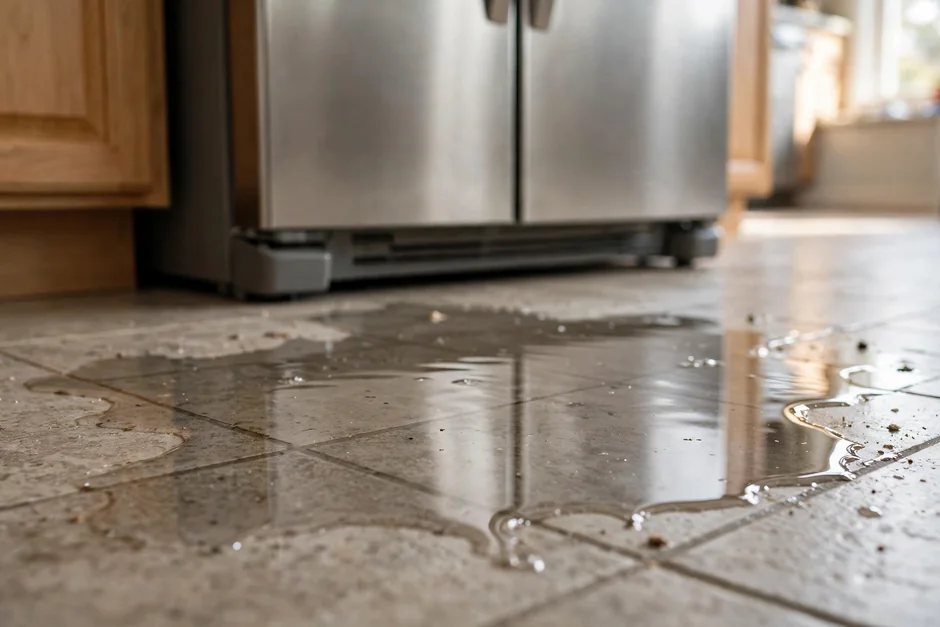
A refrigerator leaking water is most often caused by a clogged defrost drain. During the defrost cycle, meltwater is supposed to flow down a small drain tube into a pan underneath the fridge. When that tube clogs with food debris or ice, the water backs up and spills onto the floor or pools under the crisper drawers. The fix is usually straightforward, but the drain is not always the culprit, so this guide walks through the likely causes in order.
Before you start: if water is anywhere near electrical parts, unplug the fridge. Pull it away from the wall carefully so you can see behind it. Most of the checks below are safe for a homeowner. Anything involving the sealed refrigeration system or the main water inlet valve belongs to a technician.
Common causes of a refrigerator leak, in order
These are the causes we see most, starting with the one behind the majority of leak calls.
- Clogged defrost drain: The near-universal number one. Food particles and debris block the small drain hole at the back of the freezer or under the crisper drawers, and meltwater backs up instead of reaching the drain pan.
- Frozen defrost drain tube: The tube itself ices over, usually after a stretch of heavy frost buildup. Meltwater overflows into the fridge or freezer instead of draining away.
- Leaking water supply line or inlet valve: If your fridge has an ice maker or dispenser, look behind it. A loose fitting, a kinked line, or a cracked valve drips water down the back and onto the floor.
- Cracked or misplaced drain pan: The pan under the fridge catches defrost water so it can evaporate. If it is cracked, full of sludge, or sitting crooked, water ends up on the floor.
- Worn door gasket: A weak seal lets warm, humid East Tennessee air into the fridge. The extra condensation overwhelms the drain system and shows up as drips and puddles.
- Water filter or ice maker trouble: A cracked filter housing or a misaligned ice maker leaks near the dispenser or inside the freezer. If the leak started right after a filter change, reseat the filter first.
Where the water is tells you the cause
Match the location to narrow it down fast.
- Water pooling under the crisper drawers, or an ice sheet on the freezer floor: defrost drain, almost certainly.
- Puddle in front of or underneath the fridge: drain pan, or a drain tube spilling before it reaches the pan.
- Water behind the fridge by the wall: supply line, inlet valve, or ice maker connection.
- Water running down the back wall inside the fridge: clogged drain, or heavy condensation from a failing door gasket.
Safe checks you can do yourself
Work through these in order. Stop and call a pro if you reach anything involving wiring or pressurized water lines.
- Find the drain hole. It is the small opening at the back of the freezer floor or under the crisper drawers. Clear any visible debris.
- Flush the drain. Use a turkey baster or squeeze bottle to push warm, not boiling, water through until it runs freely into the pan below. If the tube is frozen, keep flushing with warm water until it clears. Do not force anything sharp down the tube, and skip the hair dryer: it can melt the plastic liner.
- Check the drain pan. It sits behind the front kick plate or at the rear. Empty it, wash out the sludge, check for cracks, and seat it back under the drain outlet.
- Test the door gasket. Close the door on a dollar bill and pull. If it slides out easily at any point, the seal is weak there. Clean the gasket with warm soapy water first: grime alone can break the seal.
- Level the fridge. Side-to-side level with a slight backward tilt helps water reach the drain and lets the doors close on their own.
- Inspect the ice maker line. Shut off the water supply first, then look for loose connections, kinks, or cracks. Tighten fittings gently: overtightening cracks them.
When to call a professional
If the puddle comes back within a few days of clearing the drain, the defrost system itself may be failing. Call too if water is leaking behind the fridge near wiring or the compressor, if the inlet valve or filter housing is damaged, or if the fridge is also cooling poorly or showing error codes. Pressurized water lines plus electrical components are not a DIY combination. That is the point where a refrigerator repair visit pays for itself: we find the actual failed part instead of guessing. For keeping the fridge efficient between services, Energy Star's refrigerator guidance covers the maintenance basics.
Mistakes that make a leak worse
These come up on service calls more than you would expect.
- Ignoring it. A small puddle warps flooring and grows mold under the fridge where you cannot see it.
- Turning the temperature colder. A colder setting does not fix a clogged drain; it just makes more frost.
- Poking the drain with something sharp. One puncture in the tube or liner turns a cleaning job into a real repair.
- Assuming a little water is normal in summer. Humidity adds condensation, but pooling water always has a cause.
Still have questions?
The common ones are answered below. If yours is not, call (865) 324-1626 and describe where the water is showing up: that detail alone usually tells us what is wrong.
Get help with refrigerator repair in Oak Ridge
If you have cleared the drain and the puddle keeps coming back, or the leak is anywhere near wiring, stop and call. Oak Ridge Quick Air Fix handles refrigerator repair across Oak Ridge, Monday through Friday. Call (865) 324-1626 and tell us where the water is: under the crispers, in front, or behind the fridge.